How to Follow Up with Leads a Real Estate Guide
If you think there's some secret script for converting real estate leads, I've got bad news. There isn't one. The real secret? It’s a system. A repeatable, reliable follow-up strategy built on four key ideas: Speed, Persistence, Value, and using the right Channel.
This guide is all about building that process—one that takes a lead from a casual click all the way to the closing table.
Your Blueprint for an Unbeatable Follow-Up Game
If you're tired of chasing cold leads that go nowhere, it's time to get structured. The top agents in your market aren't just getting lucky; they have a follow-up machine running in the background. It’s a multi-touch system designed to consistently build relationships by providing real value. That's what turns contacts into contracts.
Think of this playbook as your roadmap. We're breaking down the actionable steps you need to truly master how you follow up with leads, starting with the fundamentals.
The Four Pillars of Follow-Up
Your entire strategy rests on four pillars. If you neglect even one, the whole thing gets wobbly.
- Speed: In this business, the first agent to make contact usually wins. Getting in touch with a new lead within the first five minutes can skyrocket your conversion rates.
- Persistence: Here’s a stat that should get your attention: 80% of sales happen after the fifth follow-up. Most agents quit long before that. A planned, consistent cadence is non-negotiable.
- Value: Every single touchpoint needs to offer them something. Stop "just checking in." Send a neighborhood market report, a new listing that fits their criteria, or a helpful guide for first-time buyers.
- Channel: Don't put all your eggs in one basket. The best follow-up mixes it up. A combination of emails, calls, and texts ensures you’re reaching leads where they are most comfortable.
Your goal isn't to just sell them a house. It's to become the go-to expert they trust when they're finally ready to make a move. This simple mindset shift turns a sales pitch into a genuinely helpful service.
Building a System That Scales
Of course, a killer follow-up plan needs a steady stream of quality leads to work on. If you need to fill your pipeline first, our guide on how to generate real estate leads is packed with strategies to get you started.
For a deeper dive into nurturing those prospects, these proven lead follow-up best practices offer a fantastic framework. Combining smart lead generation with a systematic follow-up process is the true key to building a sustainable business.
Mastering the Critical First Five Minutes
In real estate, we hear a lot about "location, location, location." But when it comes to online leads, the mantra is "speed, speed, speed." That window of opportunity with a new lead doesn't just close; it slams shut. Think of it as a race. The moment a lead hits your inbox, the starting gun has fired, and the agent who responds first gets an almost insurmountable head start.
This isn't just a gut feeling from being in the trenches for years; the data is staggering. Leads you connect with in the first minute are a whopping 391% more likely to convert. Even waiting just five minutes can boost your conversion rate by 100 times compared to someone who waits an hour. Every second you delay, that lead’s intent cools, and you can bet they’re already clicking on another agent’s profile.
Your Instant Response Safety Net
Look, you can't be tethered to your phone 24/7. That's where you need a smart system working for you. An instant, automated response isn't just nice to have; it's a non-negotiable part of a modern agent's toolkit. The goal is simple: immediately acknowledge the lead, let them know a real person (you!) has received their request, and that you'll be in touch personally in just a few minutes.
Here’s how to build your safety net:
- Automated SMS: This is your first line of defense. A text message is immediate, personal, and has an open rate that’s practically 100%. It confirms you're on the case and buys you crucial time until you can make a real call.
- Automated Email: Right after the text, an automated email should go out. This is your chance to provide instant value. Include links to your site, recent testimonials, or a helpful buyer's guide. You're already helping before you've even spoken.
- CRM Alerts: Your CRM should be screaming at you the second a lead comes in. Set up text and email alerts for yourself. This is your cue to drop what you’re doing and shift from automated to personal follow-up.
The point of that first automated message isn’t to sell the house. It’s to stop the lead in their tracks and prevent them from moving on to the next agent. It’s all about buying yourself the time you need to have a genuine conversation.
First Contact Scripts That Actually Work
Once your automated system has done its job, the clock is ticking for your personal touch. The key here is to be helpful, not a high-pressure salesperson. The script you use should feel natural and change slightly based on where the lead came from—a Zillow inquiry on a specific property is a much warmer starting point than a general registration on your website.
Scenario 1: Zillow Inquiry on 123 Main St.
- Your Text (Within 5 Mins): "Hi [Lead Name], this is [Your Name] with [Brokerage]. Just saw your inquiry about 123 Main St. That's a great property! I'm pulling up the details right now. Do you have two minutes for a quick call to go over them?"
- Why this works: It's direct, references their exact action, and asks for a tiny, low-commitment next step. It's easy for them to say "yes."
Scenario 2: General Website Registration
- Your Email (Within 5 Mins): "Hi [Lead Name], thanks for signing up on my site! Happy to get a custom property search set up for you. To make sure I'm only sending you homes you'll actually love, what are the top 3 things you're looking for?"
- Why this works: You're immediately offering value, not asking for their business. The open-ended question starts a real conversation, not a sales pitch.
Don't underestimate the power of a repeatable, rapid-response process. Sales experts have found that teams with a standardized follow-up system see a 78% higher conversion rate. And since nearly half of all sales go to the vendor who responds first, your speed is directly tied to your income. If you really want to see how a systematic approach can change your business, I recommend you dive deeper into these crucial sales statistics.
Tailoring Your Follow-Up Cadence for Every Type of Lead
Every single lead you get is a different conversation waiting to happen. Someone who just requested a showing for a hot new listing on Zillow is in a completely different headspace than the person who downloaded your "First-Time Homebuyer's Guide" a few months back. If you treat them the same, you’re just spinning your wheels and probably annoying potential clients.
This is where smart segmentation comes in. The secret to converting more leads is tailoring your follow-up schedule—your cadence—to match the lead's urgency and where they are in their journey. Blasting a casual browser with daily calls will make you seem desperate. On the flip side, waiting even a day to call a motivated buyer is like handing them over to your competition. A well-thought-out cadence is your best friend here.
Think about the speed factor. It's everything in this business.
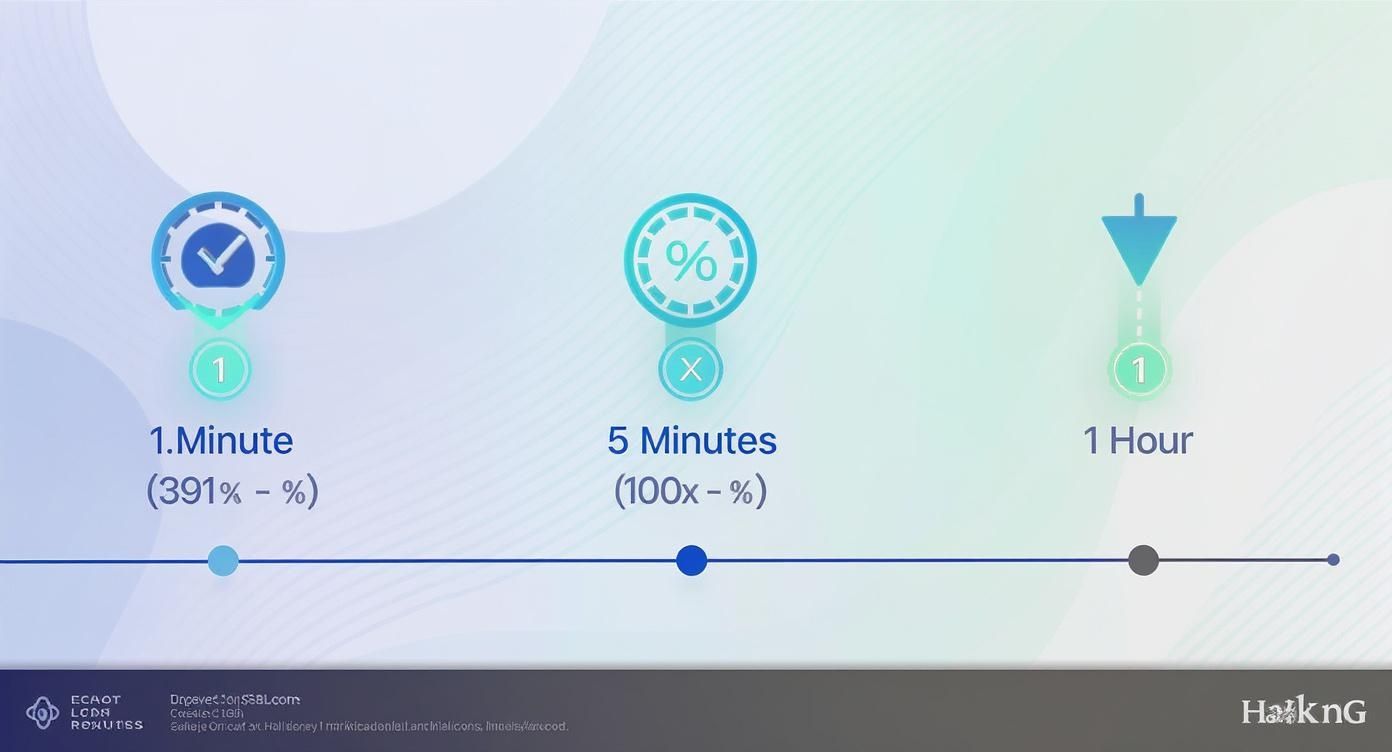
The data doesn't lie. Your chance of connecting with, let alone converting, a lead plummets after just a few minutes. That’s why your initial outreach needs to be immediate, no excuses.
Breaking Down Your Lead Types
Before you can build a killer follow-up plan, you have to know who you're talking to. In my experience, most real estate leads fit into one of three buckets, and each one needs its own playbook.
Hot Leads (High Intent): These are the people ready to move, and they're moving fast. We're talking about inquiries from portals like Zillow or Realtor.com on a specific property, direct "Contact Us" submissions, or a solid referral. They have a problem they need to solve now and they expect you to be on it.
Warm Leads (Medium Intent): This group is actively exploring but isn't quite ready to pull the trigger. They might be people who stopped by an open house, came to one of your homebuyer seminars, or signed up on your site to save a property search. They're interested, but they're still in the information-gathering phase.
Cold/Nurture Leads (Low Intent): Think of these as your long-term opportunities. This is where you'd categorize expired or withdrawn listings, FSBO contacts you’ve sourced, or leads from an old database you haven't touched in a while. The goal here isn’t a quick transaction; it’s to consistently provide value and stay top-of-mind for months, or even years.
Here's the most common mistake I see agents make: they use a "hot lead" strategy on a "warm lead." Being persistent with a hot lead shows you're on the ball. Doing the same with a warm lead just makes you annoying. Always match your energy to their intent.
Cadence in Action: Hot vs. Warm Leads
Let's make this real. Here’s a look at how a 30-day follow-up plan might differ for a hot Zillow lead versus a warm lead who just registered on your website. You'll see big differences in the timing, the communication channel, and the message itself.
Think of the following table not as a rigid script, but as a flexible framework. You can and should adapt this to your own voice and the tools you use.
Sample Follow-Up Cadence Comparison
| Day | Hot Lead (Zillow Inquiry) | Warm Lead (Website Registration) |
|---|---|---|
| 1 | Immediate: Phone Call + Voicemail. 5 Mins: SMS Follow-up. 1 Hour: Email with property details & similar listings. | Immediate: Automated Welcome Email with value (e.g., buyer's guide). 5 Mins: Automated SMS. |
| 3 | Phone Call. If no answer, leave a voicemail referencing the email you sent. | Personalized email asking about their search criteria to refine their saved search. |
| 7 | SMS with a link to a new listing that matches their initial inquiry. "Saw this and thought of you!" | Email with a local market report or a blog post on "5 Things to Know Before Buying in [Your Town]." |
| 14 | Email with a quick video CMA of the neighborhood they inquired about. Keep it short and valuable. | SMS check-in: "Hi [Name], just wanted to see if the property alerts I set up are helpful. Anything you'd like to adjust?" |
| 21 | Phone call to see if they're still in the market or have found an agent. Offer a no-pressure consultation. | Email sharing a client success story or a new testimonial relevant to their potential situation. |
| 30 | Email moving them to a long-term nurture plan. Offer to keep them updated with a monthly market snapshot. | Phone call to try and connect live. "Just wanted to put a voice to the emails! Any questions I can answer about the market?" |
This side-by-side comparison really highlights the shift in intensity. The hot lead gets immediate, multi-channel attention focused on the transaction, while the warm lead receives valuable, educational content designed to build a relationship over time.
Why a "Value-First" Approach Always Wins
Look closely at those cadences again. You won't find a single "just checking in" message. Every single touchpoint is designed to offer real value.
For the hot lead, value means speed, direct answers, and relevant property info. For the warm lead, value looks more like market insights, helpful resources, and gentle guidance. This simple shift changes the entire dynamic. You stop being just another salesperson and become a trusted advisor.
Remember, most people consume a lot of content before they ever decide to talk to an agent. By being the one who provides that content—the market reports, the new listings, the helpful articles—you are embedding yourself in their decision-making process. That’s how you build real trust. And when they’re finally ready to make a move, you’ll be the only agent they think to call.
Scripts and Emails That Actually Get a Reply
Having a solid follow-up schedule is half the battle. The other half? Filling it with messages that people actually want to read and respond to. This is where so many agents trip up, defaulting to generic, salesy language that lands them straight in the trash folder.
The goal with every single script or email is simple: be a real person, be genuinely helpful, and make it incredibly easy for them to reply.
The best follow-up messages don't even feel like a "follow-up." They're just a natural, helpful continuation of a conversation you've already started. Ditch the tired, overused lines like "just checking in" or "wanted to touch base." Every time you reach out, you should be providing a new piece of value, answering a question they haven't even asked yet, or offering a fresh perspective.
This is a fundamental shift in mindset. You're not just chasing a commission; you're guiding someone through one of the most significant financial and emotional decisions of their life. Your communication needs to reflect that.
What High-Converting Messages Have in Common
Whether you're crafting an email, firing off a quick text, or leaving a voicemail, the most effective messages all share a few key ingredients. They're personal, they solve a problem, and they include a clear, low-pressure call to action.
Make it Personal: Go way beyond just using their first name. Mention the specific house they looked at, a detail about the neighborhood they liked, or something they said during your first conversation. It shows you were actually listening.
Solve Their Problem: Frame every message around their needs, not your own. Instead of asking, "Are you ready to buy yet?" offer something useful. Try something like, "I just pulled a quick market report for the area you loved—thought you'd find this interesting."
Give a Clear Next Step: Don't leave them guessing. End every message with a simple, easy-to-answer question. Vague endings like "Let me know your thoughts" just create work for them. Be specific: "Would Thursday at 4 PM work for a quick 10-minute call to go over this?"
Pro Tip: The best scripts aren't about what you say, but what you ask. Your most powerful tools are open-ended questions. Questions like, "What's the most important thing for you in your next home?" or "What does your ideal moving timeline look like?" get people talking and give you the ammo you need to truly help them.
Field-Tested Scripts and Templates for Any Situation
Here are a few real-world examples you can steal and adapt to your own voice. Notice how each one leads with value.
Scenario 1: The First Value-Add Email After a Call
Subject: A few homes you might like + that market info
Hi [Lead Name],
Great talking with you earlier about your search in [Neighborhood].
As promised, I've attached a quick CMA for the area to give you a feel for recent sales. I also dug up two other listings that have that [specific feature they mentioned] you're looking for. You can check them out here: [Link 1] and [Link 2].
No pressure at all, just wanted to get these in your hands. Do either of these catch your eye?
Best,
[Your Name]
Scenario 2: The "Re-engagement" Text for a Cold Lead
"Hey [Lead Name], it's [Your Name]. A new listing just popped up at [Address] that made me think of you—it has that big backyard you mentioned. No need to reply if you're all set, but you can see the photos here: [Link to Listing]. Hope you're having a great week!"
This script is brilliant because it's so low-pressure. You're providing immediate value (a new listing) and giving them an easy out, which, funny enough, makes them more likely to respond.
When to Send Your Follow-Up Emails
Persistence is crucial, but timing is everything. It's interesting—while you absolutely need to be fast with your initial response to a new lead, some data suggests that jumping the gun on the first follow-up can actually hurt you.
Sending a follow-up email within one day of your first message can actually decrease response rates by about 11%. But wait about three days? You could see replies jump by 31%. The lesson here is to give people a little breathing room. For a deeper dive, check out our complete guide on email marketing for real estate.
The numbers also show that there are diminishing returns. Your first follow-up email can generate 220% more responses than your initial outreach alone, but the second one only adds another 9%. This is critical intel. It confirms that while most agents give up way too early, sending an endless barrage of emails isn't the answer either.
Using Technology for Smarter Follow-Up Systems
If you're still trying to juggle every lead from a spreadsheet, you're not just working hard—you're working inefficiently. It’s a recipe for burnout and, worse, letting high-potential leads slip away. The secret to scaling your follow-up without cloning yourself is to lean on technology that does the heavy lifting for you.
A solid Customer Relationship Management (CRM) platform is the foundation. Think of it as your command center. It's where you'll schedule your tasks, tag and segment leads, and roll out automated communications that still feel personal. When a new lead hits your system, the CRM should instantly fire off that first critical touchpoint, making sure no one is ever left waiting.
Automate Value, Not Just "Checking In"
Here’s where a lot of agents get it wrong. They set up automated emails that just say, "Hey, just checking in!" That's not follow-up; it's noise. The real goal is to automate the delivery of genuine value. This is where specialized real estate tools completely change the game.
Instead of generic pings, imagine sending something truly useful, instantly:
- Lightning-Fast CMAs: A lead mentions a neighborhood they like. Instead of spending an hour digging through the MLS, you can use a tool like Saleswise to generate a beautiful, data-rich Comparative Market Analysis in seconds. You just went from being another agent to a market expert in their inbox.
- Hyperlocal Content: Someone is interested in a specific part of town? Instantly generate a few social media post ideas or a short blog snippet about that area's market trends. It shows you're dialed in and provides them with information they actually care about.
- Virtual Staging Visuals: Got a cold lead you want to re-engage? Don't just ask if they're still looking. Send them an AI-generated virtual staging of a property similar to what they were interested in. It’s a visual, compelling way to restart the conversation.
By integrating these kinds of tools, your automated follow-up becomes a value-driven machine that actually nurtures leads. You can learn more about picking the right tools in our guide to real estate market analysis software.
Balancing Automation with the Human Touch
Even with the best tech stack, some parts of this business will always be about human connection. Cold calling is a perfect example. You can't automate a real conversation. But you have to be realistic about it. The typical conversion rate for cold calling hovers between 2% and 5%. It's a numbers game that requires persistence. For those looking to get an edge, it's worth exploring how an AI Sales Assistant can fit into your strategy.
Compare that to LinkedIn outreach, which can hit lead-to-opportunity conversion rates of 12% to 18%. This doesn't mean you should abandon the phone; it just shows why you need a multi-channel approach. Let technology handle the scale and efficiency, so you can focus your energy on high-impact personal connections.
Your best follow-up system uses technology to create opportunities for authentic human connection. Let an automated email deliver the CMA, so when you call them, you can have a meaningful conversation about what that data means for their future.
Ultimately, technology is your leverage. It lets you deliver personalized, valuable content at a scale that's impossible to do manually. It takes care of the tedious work so you can stay top-of-mind with every single lead, turning a chaotic pipeline into a predictable, relationship-driven business.
Your Top Follow-Up Questions, Answered
Even the best agents with a killer follow-up plan run into tricky situations. What do you do when a lead goes silent? How many times is too many times to call? It’s these real-world questions that can make or break your conversion rates.
Let's dive into the common hurdles I see agents face every day. Think of this as your playbook for those moments when you're not sure what the next move should be.
How Many Times Should I Follow Up Before I Call It Quits?
This is the big one, isn't it? The simple answer is almost always: more than you think. We've all felt that hesitation, that fear of being "annoying." But the data doesn't lie.
There's a well-known stat in sales that says 80% of deals require at least five follow-ups. But get this—only 8% of salespeople ever make it that far. That gap is where fortunes are made in this business. It’s where you can outwork and outlast the competition.
Instead of picking an arbitrary number like "seven attempts and I'm out," shift your mindset. Your follow-up should continue for as long as you're providing something of value. If a lead has been completely unresponsive after 10-12 genuinely helpful attempts across email, text, and phone, then it’s time to change tactics. Don’t delete them; just move them to a long-term nurture campaign, like your monthly newsletter, and focus your high-touch efforts on more engaged prospects.
What's the Best Time of Day to Call or Email?
Timing can make a huge difference in whether you get a response or just crickets. While every lead's schedule is unique, decades of sales experience have revealed some clear patterns that can give you an edge.
For Phone Calls: I’ve found the sweet spots are late afternoon, between 4 PM and 5 PM, or mid-morning, around 10 AM to 11 AM. People are often wrapping up their day or taking a coffee break. Try to avoid Monday mornings (they're swamped) and late Friday afternoons (they've already checked out for the weekend).
For Emails: You want to catch people when they're at their desks. Sending emails around 10 AM usually gets the best open rates. I've also had surprising success with early-bird emails sent around 6 AM, catching people scrolling on their phones before the day officially begins.
The absolute best time? It’s when your specific lead is active. Pay attention to the digital breadcrumbs. If you see them opening your emails or browsing your site at 9 PM, that’s your golden window to reach out. Your CRM is your best friend here.
How Do I Re-Engage a Lead That's Gone Completely Cold?
We all have them—the leads that seemed super promising and then vanished. The classic "just checking in" message is a dead end. To bring a cold lead back from the brink, you need to show up with something new and genuinely valuable.
Here are a few plays that have worked for me time and time again:
The "Made Me Think of You" Listing: Ditch the generic property drip. Instead, send a personal text or email with one, hand-picked property. Try something like, "A new listing just hit the market at [Address], and it immediately made me think of you because it has that huge backyard you wanted. No pressure, but here’s the link if you're curious."
The "Market Shift" Update: If it’s been a few months, the market has likely changed. Send a quick, compelling update. An email with the subject "Big changes in the [Neighborhood] market" can be very effective. Inside, include a single, powerful stat about home prices or a quick video CMA.
The Simple, Direct Question: Sometimes, the easiest way is the best. A simple text can cut through the noise: "Hey [Name], are you still thinking about buying in [City] this year?" It’s a low-pressure, yes/no question that gets you the clarity you need to either re-engage or move on.
The goal is to restart the conversation with value, not to pressure them for a decision.
What's the Real Difference Between Follow-Up and Nurturing?
People often use these terms interchangeably, but they are two distinct—and equally critical—parts of the process. Knowing which hat to wear and when is key.
Follow-up is the active pursuit. It's a direct, action-oriented sequence designed to get a specific result, like booking a buyer consultation or a listing appointment. It’s typically more intense and short-term, especially with a hot lead who just filled out a form on your website.
Lead Nurturing, on the other hand, is the long game. It's about building a relationship and staying top-of-mind by providing consistent value over months or even years. This is your monthly market report, your blog posts about the local community, your home maintenance tips. It’s less about "are you ready now?" and more about establishing yourself as the undeniable expert they'll call when they are ready.
Think of it this way: all follow-up is a type of nurturing, but not all nurturing is active follow-up. A world-class system knows how to seamlessly transition a lead from an intense follow-up plan to a long-term nurture campaign once their initial urgency fades.
Ready to stop guessing and start converting? Saleswise gives you the tools to deliver instant, high-value content at every stage of your follow-up. Generate stunning CMAs in 30 seconds, create compelling virtual staging, and craft expert-level emails and scripts with AI.
Start your $1 seven-day trial of Saleswise today and turn your follow-up system into a conversion machine.