7 Property Description Examples to Copy in 2025
In a crowded real estate market, a compelling property description is your first, and often only, chance to capture a buyer's attention. A generic, feature-heavy summary can get lost in a sea of listings, while a well-crafted narrative can spark imagination, create an emotional connection, and drive qualified buyers to schedule a viewing. The difference isn't just about using better adjectives; it's about strategic storytelling tailored to a specific audience.
This guide moves beyond simple feature lists to provide deep strategic analysis of powerful property description examples. We will deconstruct what makes a description truly effective, focusing on the specific techniques that attract ideal buyers and secure more showings. A great description works hand-in-hand with your broader marketing efforts. For a deeper understanding of how to make your property listings truly stand out and attract local attention, explore proven real estate SEO strategies to ensure your well-crafted words reach the right people.
We will break down 7 distinct, powerful examples, exploring the psychology behind each approach and offering actionable takeaways you can implement immediately. You will learn how to replicate these expert-level descriptions for any property type. From luxury estates to family homes and investment opportunities, you'll learn the techniques top agents use to turn online clicks into in-person tours. Get ready to transform your listings from simple advertisements into irresistible invitations.
1. The Luxury Lifestyle Property Description
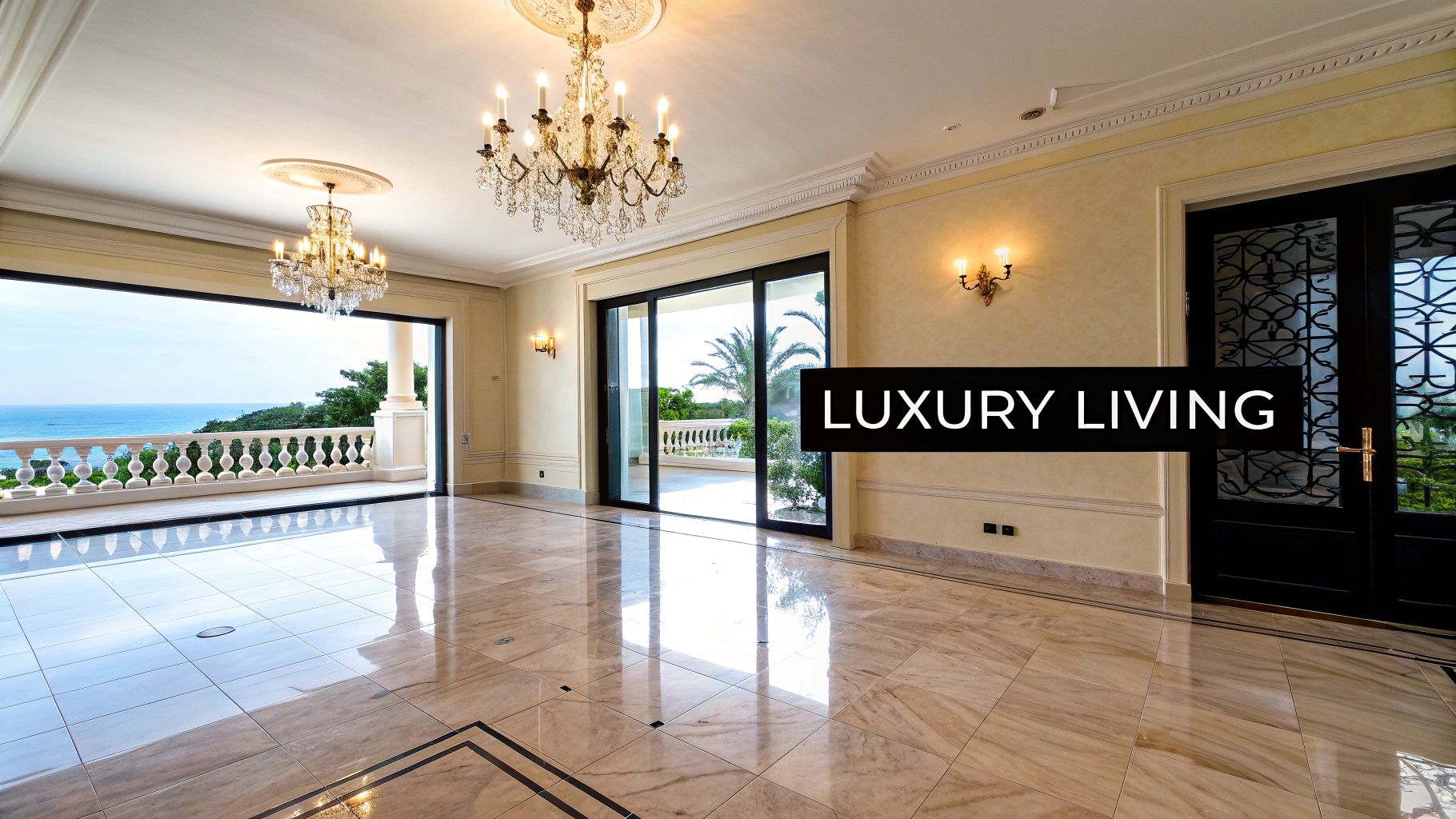
The luxury lifestyle property description is an art form, designed to sell an experience, not just a structure. This approach uses evocative, sophisticated language to paint a picture of an aspirational life, appealing directly to affluent buyers who seek exclusivity, prestige, and unparalleled comfort. It moves beyond listing features and instead focuses on the sensory and emotional benefits of living in a high-end home.
This style is about storytelling. It highlights bespoke details, premier brand names, and unique architectural elements that set a property apart. The goal is to make a potential buyer feel the prestige of the address and envision themselves hosting elegant gatherings, enjoying serene moments of relaxation, or benefiting from the status the home provides. This is one of the most powerful property description examples for the high-end market.
Strategic Breakdown
This method works by connecting with the buyer's aspirations. Instead of saying "large kitchen," a luxury description might say, "A chef’s kitchen curated with Wolf and Sub-Zero appliances, designed for grand-scale entertaining or intimate family dinners." This specificity creates a sense of value and exclusivity.
- Focus: Experiential benefits over physical attributes.
- Language: Refined, evocative, and specific. It avoids clichés and generic superlatives.
- Target: Affluent buyers motivated by status, quality, and lifestyle.
Actionable Tips for Implementation
To craft a compelling luxury property description, focus on the details that signify quality and a premium living experience.
- Name-Drop with Purpose: Mention specific, high-end brands for appliances, fixtures, and finishes. "Gaggenau appliances" or "Waterworks fixtures" carry more weight than "luxury appliances."
- Highlight Bespoke Features: Detail custom elements like handcrafted millwork, an imported Italian marble fireplace, or a temperature-controlled wine cellar. These unique selling propositions justify a premium price.
- Evoke a Sensory Experience: Use descriptive words that appeal to the senses. Describe the "sun-drenched living area," the "serene tranquility of the private spa," or the "breathtaking panoramic city views."
- Tell the Story of the Space: Frame features around their use. The patio isn't just a patio; it's "an idyllic setting for alfresco dining under the stars." The primary suite isn't just a bedroom; it's a "private sanctuary for ultimate relaxation."
By mastering this style, you can effectively communicate the exceptional value of a luxury property, attracting discerning buyers willing to invest in a premier lifestyle.
2. The Family-Focused Property Description
The family-focused property description is a warm, practical, and emotionally resonant approach designed to appeal to buyers prioritizing a nurturing environment for their children. This style moves beyond the home’s four walls to sell a complete family-friendly lifestyle, emphasizing safety, community, convenience, and opportunities for growth and recreation. It speaks directly to the core needs of parents and multigenerational households.
This method is about building a narrative of daily life. It highlights features like a fenced-in backyard for safe play, proximity to top-rated schools, and quiet cul-de-sac locations. The goal is to help potential buyers envision their children growing up in the home, creating lasting memories, and thriving within a supportive community. It is one of the most effective property description examples for suburban and residential markets.
Strategic Breakdown
This method works by addressing the primary concerns and desires of family buyers. Instead of just saying “three bedrooms,” a family-focused description might frame it as, “Three spacious bedrooms, including a versatile bonus room perfect for a playroom or teen lounge.” This contextualization connects the feature directly to a family need, making the property more relatable and desirable.
- Focus: Safety, convenience, community, and lifestyle benefits for families.
- Language: Warm, inviting, and practical. It uses words that evoke security and happiness.
- Target: Parents, multigenerational families, and buyers planning for the future.
Actionable Tips for Implementation
To write a powerful family-focused property description, concentrate on the elements that contribute to a secure, convenient, and enriching family life.
- Spotlight Schools and Education: Always mention the school district and, if notable, specific schools by name. Referencing high ratings or special programs is a major draw. "Zoned for the award-winning Northwood Elementary" is a powerful statement.
- Emphasize Safe Play and Outdoor Space: Detail features like a "fully fenced backyard perfect for kids and pets," a "quiet, low-traffic street," or proximity to a "neighborhood park with a brand-new playground." These details reassure parents about their children's safety.
- Detail Functional Interior Spaces: Highlight practical features that make family life easier. Mention a "mudroom for storing backpacks and sports gear," a "large pantry for family-sized grocery trips," or "abundant storage space for toys and seasonal items."
- Paint a Picture of Community Life: Describe the neighborhood’s character. Use phrases like, "Join a vibrant community with annual block parties" or "Enjoy weekend strolls to the nearby ice cream shop and library." This sells the experience of belonging.
By mastering this style, you can connect with family buyers on an emotional level, showcasing your property not just as a house, but as the perfect setting for their family’s future.
3. The Investment Property Description
The investment property description is a data-driven and analytical approach to property listings, crafted specifically for real estate investors. This style prioritizes financial metrics, return on investment (ROI) potential, and market data over the emotional or lifestyle benefits that appeal to a traditional homebuyer. It speaks the language of numbers, focusing on cap rates, cash flow, and appreciation potential.
This method is about presenting a clear and compelling business case. It lays out the facts and figures that allow an investor to quickly assess the viability and profitability of a property. Instead of describing a cozy living room, it details rental comps, operating expenses, and zoning regulations. The goal is to provide a transparent, comprehensive financial snapshot that builds investor confidence and highlights a sound acquisition opportunity, making it one of the most crucial property description examples for this niche.
Strategic Breakdown
This method works by directly addressing the primary motivation of an investor: financial return. It strips away the fluff and focuses on the metrics that matter. A description might state, "A turnkey duplex with a 7.5% pro-forma cap rate and below-market rents, offering immediate value-add potential," which is far more impactful to an investor than talking about the property's charm.
- Focus: Financial performance, ROI, and market data.
- Language: Analytical, direct, and factual. It uses industry-specific terminology like NOI, cap rate, and GRM.
- Target: Real estate investors, developers, and fund managers motivated by profit and portfolio growth.
Actionable Tips for Implementation
To write a powerful investment property description, you must think like an investor and provide the data they need to make an informed decision.
- Lead with the Numbers: Immediately present key financial metrics like Gross Rental Income (GRI), Net Operating Income (NOI), and the capitalization rate. This is the information investors scan for first.
- Provide Verifiable Data: Include current rent rolls, operating expense statements, and recent rental comps. Transparency builds trust. You can use a sales comparison approach to validate market value and rental rates.
- Highlight the "Upside": Clearly articulate the value-add opportunities. This could be raising below-market rents to current rates, developing an underutilized parcel of land, or making cosmetic upgrades to increase rental income.
- Reference Market Trends: Mention local economic indicators, such as job growth, population increases, or nearby development projects. This context demonstrates long-term appreciation potential and substantiates the investment's viability.
4. The Lifestyle and Experience Property Description
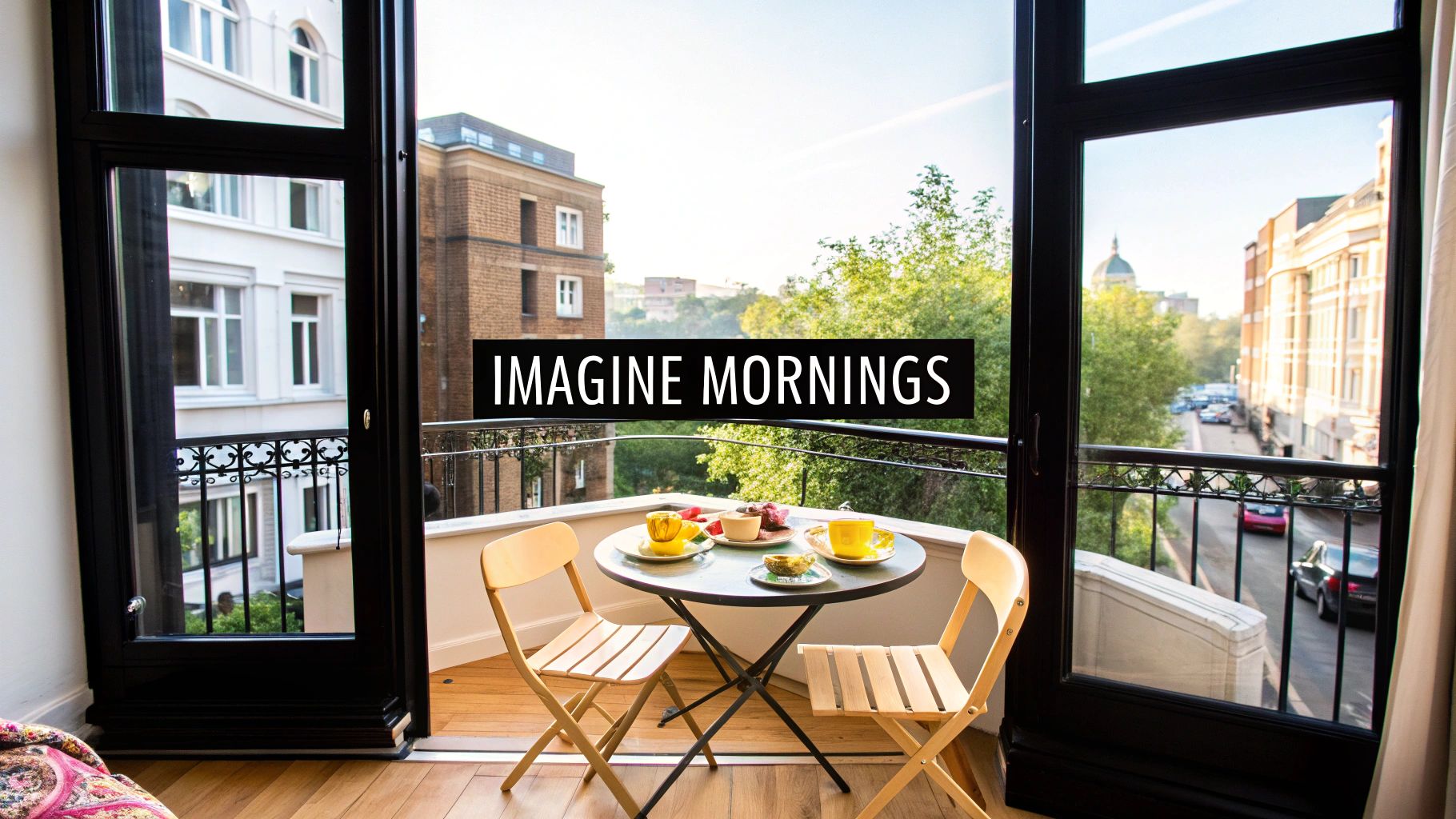
The lifestyle and experience property description is a narrative-driven approach that sells a way of life, not just four walls and a roof. This method focuses on telling a story about the daily experiences a property enables, emphasizing ambiance, activities, and the feeling of living in the space. It moves beyond listing features to paint a vivid picture for potential buyers, allowing them to imagine their life unfolding there.
This style is about creating an emotional connection. It describes the joy of a morning coffee bathed in sunlight, the fun of hosting friends on the patio, or the peace of a quiet weekend retreat. By focusing on what a buyer will do and feel in the home, you create a powerful and memorable narrative. This makes it one of the most effective property description examples for vacation homes, urban lofts, and properties in vibrant communities.
Strategic Breakdown
This method works by tapping into the buyer’s imagination and desire for a certain lifestyle. Instead of "three bedrooms," it describes "a peaceful master suite for restful nights and two additional rooms perfect for family, guests, or a creative home office." The focus shifts from the what to the why.
- Focus: The experiences, emotions, and daily life the property offers.
- Language: Narrative, personal, and sensory. It often uses words like "imagine" or "picture yourself."
- Target: Buyers motivated by lifestyle, community, and personal fulfillment over raw specs.
Actionable Tips for Implementation
To write a compelling lifestyle description, immerse yourself in the experience the home provides and translate that into words. Tools can also assist; for example, you can discover how to use real estate virtual staging software to visually complement your narrative-driven descriptions.
- Use "Imagine" to Guide the Buyer: Start sentences with prompts like "Imagine waking up to..." or "Picture yourself hosting..." to directly engage the reader's imagination and place them in the home.
- Describe a Day in the Life: Walk the reader through a typical day or weekend. Mention the "sun-drenched breakfast nook perfect for your morning brew" and the "cozy living room ideal for evening relaxation with a good book."
- Connect to the Neighborhood: Weave in local attractions and lifestyle perks. Mention the "short stroll to the farmer's market," the "nearby trails for weekend hikes," or the "vibrant cafes just around the corner."
- Focus on Feelings and Senses: Use words that evoke emotion and sensory details. Describe the "tranquil quiet of the backyard," the "inviting warmth of the fireplace," or the "energy of the bustling city view."
By telling the story of the home, you build a connection that goes beyond a simple features list, helping buyers fall in love with the life the property promises.
5. The Minimalist and Honest Property Description
The minimalist and honest property description cuts through the noise of overly promotional language. This straightforward, factual approach emphasizes transparency, appealing to data-driven and often skeptical buyers who value specific details over marketing fluff. It prioritizes clarity and honesty, building immediate trust with a buyer demographic that is weary of embellished claims.
This style is about presenting the property as it is, warts and all. It focuses on the core data: square footage, room count, year built, and recent updates. The goal is to give potential buyers all the essential information they need to make an informed decision quickly, without hyperbole. This is one of the most effective property description examples for markets where buyers are highly analytical, such as tech-forward cities or for properties that attract practical, no-nonsense investors.
Strategic Breakdown
This method works by establishing credibility from the outset. Instead of saying "cozy starter home," a minimalist description might state, "950 sq. ft. bungalow with original hardwood floors needing refinishing." This transparency manages expectations and attracts serious buyers who appreciate knowing the property's true condition.
- Focus: Core facts, quantitative data, and transparent condition reports.
- Language: Clear, direct, and simple. It avoids jargon, superlatives, and emotional appeals.
- Target: First-time homebuyers, investors, and younger, data-savvy demographics (Millennials/Gen Z).
Actionable Tips for Implementation
To craft a compelling minimalist description, lead with the facts and maintain a tone of transparent honesty throughout the listing.
- Lead with the Vitals: Start with the most critical data: bedrooms, bathrooms, square footage, lot size, and year built. This allows buyers to quickly qualify or disqualify the property based on their core needs.
- Be Specific About Updates and Flaws: Clearly list recent improvements (e.g., "New roof in 2022," "HVAC replaced in 2021"). Equally, be upfront about what needs work, like "kitchen requires updating" or "cosmetic repairs needed in the main bathroom."
- Use Simple, Accessible Language: Avoid real estate jargon like "charming" or "unique." Instead, use direct descriptors like "functional layout," "south-facing windows," or "fenced backyard." This makes the listing easy to understand for everyone.
- Clarify Inclusions and Exclusions: Explicitly state what stays and what goes. For example, "All kitchen appliances included, washer/dryer not included." This prevents misunderstandings and disputes later in the process. You can find another helpful property description sample that highlights this direct approach.
By adopting this honest style, you build a foundation of trust that can speed up the sales cycle and attract serious, well-informed buyers.
6. The Historic and Character Property Description
The historic and character property description is a narrative journey into the past, crafted to enchant buyers who value authenticity, craftsmanship, and a tangible connection to history. This approach focuses on storytelling, weaving a rich tapestry of a home’s heritage, architectural significance, and unique, time-honored details. It moves beyond a simple list of rooms to celebrate the story and soul of the property.
This style is about preservation and legacy. It highlights original features like handcrafted millwork, period-specific hardware, and architectural elements that define an era. The goal is to make a potential buyer feel like a custodian of history, appreciating the unique charm and irreplaceable quality that cannot be replicated in modern construction. This is one of the most compelling property description examples for unique and older homes.
Strategic Breakdown
This method works by appealing to a buyer’s sense of romance, nostalgia, and appreciation for enduring quality. Instead of saying "old house," a historic description might say, "A lovingly preserved 1908 Craftsman bungalow, featuring its original heart-pine floors and an inviting inglenook fireplace." This specificity positions the home’s age as a valuable asset, not a liability.
- Focus: Authenticity, architectural integrity, and the story behind the home.
- Language: Descriptive, respectful, and historically informed. It uses terms that convey craftsmanship and heritage.
- Target: Buyers seeking one-of-a-kind properties with soul, history buffs, and those who reject cookie-cutter homes.
Actionable Tips for Implementation
To write a powerful historic property description, you must become a storyteller and a historian, highlighting the features that make the home a treasure.
- Do Your Homework: Research the property's history, architectural style (e.g., Queen Anne, Mid-Century Modern, Tudor), and the original architect if possible. Mentioning its designation on a historic register is a major selling point.
- Spotlight Original Details: Emphasize preserved elements. Mention "original wavy glass windows," "unpainted oak trim," "a restored clawfoot tub," or "built-in cabinetry with period hardware." These are the features that character-home buyers crave.
- Balance Old and New: Acknowledge modern updates within the historic context. Frame them as thoughtful improvements that enhance livability without compromising character, such as "a gourmet kitchen designed to complement the home's historic aesthetic" or "updated electrical and plumbing for modern peace of mind."
- Tell a Compelling Story: Weave the home’s past into the description. The study isn't just a room; it's "the original library, where sunlight streams through leaded glass windows, perfect for an afternoon of reading." The porch is "a quintessential Southern veranda, ideal for enjoying sweet tea and conversation."
By mastering this style, you can attract buyers who will not just purchase a house, but will cherish becoming the next chapter in its ongoing story.
7. The Eco-Friendly and Sustainable Property Description
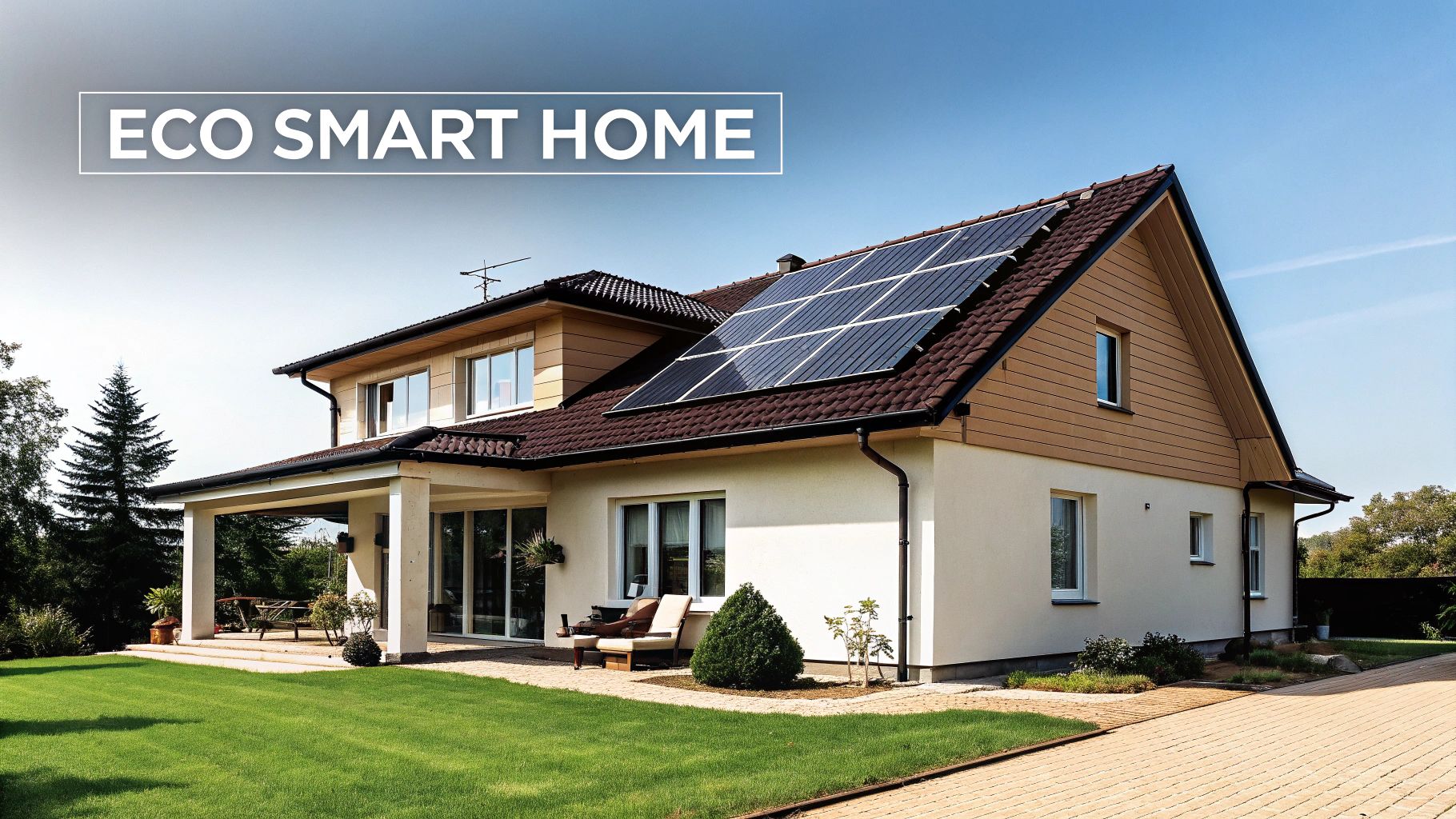
The eco-friendly property description targets a growing segment of buyers who prioritize sustainability, energy efficiency, and a healthier living environment. This approach moves beyond aesthetics and square footage, focusing instead on the tangible benefits of green technology and conscious design. It highlights features like solar panels, sustainable materials, and energy-saving systems, framing them not just as amenities but as smart, long-term investments.
This style is about education and value demonstration. It explains how specific features contribute to a lower carbon footprint, reduced utility bills, and improved indoor air quality. By detailing certifications like LEED or Passive House, the description builds credibility and appeals to the logic and values of environmentally-conscious buyers. This is one of the most relevant and forward-thinking property description examples for today’s market.
Strategic Breakdown
This method works by aligning the property with the buyer's values and financial prudence. Instead of simply stating "new windows," a sustainable description would specify, "ENERGY STAR certified triple-pane windows that drastically reduce thermal loss, lowering annual heating costs." This data-driven approach provides concrete proof of the home’s value and long-term benefits.
- Focus: Quantifiable benefits like energy savings and health improvements.
- Language: Specific, informative, and credible. It uses recognized certifications and technical terms to build trust.
- Target: Environmentally-conscious buyers, tech-savvy individuals, and those looking for long-term cost savings.
Actionable Tips for Implementation
To write a powerful eco-friendly description, you must translate green features into tangible lifestyle and financial advantages.
- Specify Certifications and Ratings: Clearly state any official green credentials, such as "LEED Gold certified" or "a HERS Index score of 45." These third-party validations are powerful selling points.
- Quantify the Savings: Whenever possible, provide real numbers. Mention the "owned 8kW solar panel system that cuts average electricity bills by 70%" or the "high-efficiency HVAC system saving an estimated $500 annually."
- Explain the 'How' and 'Why': Don't just list features; explain their benefits. The reclaimed hardwood floors aren't just stylish; they are "sustainably sourced to reduce environmental impact." The xeriscaped yard isn't just low-maintenance; it "conserves thousands of gallons of water per year."
- Highlight Health and Wellness: Connect green features to a healthier lifestyle. Mention the "whole-house air filtration system that removes allergens" or the "use of non-toxic, low-VOC paints for superior indoor air quality."
By adopting this approach, you can attract a dedicated and growing niche of buyers, effectively justifying a property's premium price through its sustainable, cost-saving, and health-conscious design.
7-Style Property Description Comparison
| Style | 🔄 Implementation Complexity | ⚡ Resource & Time | 📊 Expected Outcomes | 💡 Ideal Use Cases | ⭐ Key Advantages |
|---|---|---|---|---|---|
| The Luxury Lifestyle Property Description | High — requires refined vocabulary and brand knowledge | High — pro photography, staging, designer consultation | Attracts HNW buyers; justifies premium pricing | Ultra‑luxury penthouses, waterfront estates, celebrity markets | Elevates perceived value; emotional aspirational appeal |
| The Family-Focused Property Description | Medium — needs accurate local school and safety research | Medium — neighborhood shots, amenity documentation | Broad family appeal; stronger emotional relevance | Suburban homes, school‑district hotspots, multigen households | Speaks to buyer motivations; practical, relatable info |
| The Investment Property Description | High — financial modeling and legal clarity required | High — comps, historical performance, expense ledgers | Draws investors; enables rapid ROI assessment and due diligence | Multifamily, commercial listings, rental portfolios | Data-driven credibility; clear ROI and risk framing |
| The Lifestyle and Experience Property Description | Medium — strong storytelling and cultural knowledge | Medium — curated imagery, local context research | High engagement and shareability; memorable listings | Vacation rentals, second homes, urban lifestyle properties | Differentiates via narrative; creates emotional desire |
| The Minimalist and Honest Property Description | Low — factual, concise writing with few embellishments | Low — measurements, simple photos, bullet format | Builds trust; attracts serious buyers; reduces surprises | FSBO, quick sales, online-first marketplaces | Transparency; efficient to produce; appeals to skeptical buyers |
| The Historic and Character Property Description | High — research on era, provenance and preservation | High — archival photos, restoration records, expert input | Attracts niche buyers; can command premiums; media interest | Heritage homes, restored estates, architecturally significant properties | Rich narrative value; uniqueness increases perceived worth |
| The Eco-Friendly and Sustainable Property Description | Medium‑High — technical understanding of green systems | High — certification docs, energy data, specialist photos | Appeals to eco-conscious buyers; justifies long‑term savings | LEED/Passive House listings, eco‑communities, new green builds | Quantifiable energy savings; market differentiation; incentives |
Putting It All Together: Your Blueprint for High-Converting Descriptions
Throughout this guide, we've journeyed through a diverse collection of property description examples, moving far beyond generic feature lists. From the evocative language of luxury listings to the data-driven precision of investment-focused narratives, the core lesson is clear: a one-size-fits-all approach no longer works in a competitive market. The most successful listings are not just described; they are strategically positioned.
By dissecting each example, we've uncovered the blueprint for crafting descriptions that resonate deeply with specific buyer personas. The goal is to stop selling a house and start selling a dream, a solution, or a smart financial future. This requires a shift in perspective from merely listing amenities to articulating a property's unique value proposition for its ideal inhabitant.
Core Takeaways: From Examples to Execution
To transform these insights into action, keep these fundamental principles at the forefront of your listing strategy:
- Audience First, Always: Before writing a single word, define your target buyer. Is it a growing family needing space and community? A discerning professional seeking luxury and convenience? An investor focused solely on ROI? Every word, feature, and emotional hook should be chosen with this specific person in mind.
- Narrative is King: Features tell, but stories sell. Whether it's the story of cozy family weekends in the backyard, the story of sophisticated urban living, or the story of a savvy investment generating passive income, a compelling narrative makes a property memorable and desirable.
- Structure for Scannability: Modern buyers are scanners. Use bold headlines, short paragraphs, and bullet points to highlight key selling points. This ensures that even a quick glance delivers the most impactful information, encouraging the reader to slow down and engage more deeply.
- Balance Emotion with Logic: The most potent descriptions blend emotional appeal with factual reinforcement. Pair a description of a "sun-drenched kitchen perfect for morning coffee" with practical details like "newly installed quartz countertops and energy-efficient appliances." This satisfies both the heart and the head.
Your Actionable Blueprint for Success
Mastering the art of writing compelling listing descriptions is a high-leverage skill that directly impacts your bottom line. It influences click-through rates, inquiry volume, and ultimately, the final sale price. Remember that your description is a critical piece of a much larger marketing puzzle. It works in concert with professional photography, strategic pricing, and your own professional branding to create a cohesive and powerful sales message.
Beyond the compelling property descriptions, a complete blueprint for high-converting listings also includes ensuring the agent's professional image contributes to building trust. Explore ideas for creating impactful effective real estate agent photo ideas to complement your stellar listings.
Ultimately, the property description examples in this article are more than just templates; they are strategic frameworks. They empower you to move beyond simply filling in blanks and instead become a master storyteller for every home you represent. By embracing this strategic approach, you elevate your marketing, connect more effectively with buyers, and build a reputation for presenting listings that are simply irresistible.
Ready to stop staring at a blank page and start generating high-converting property descriptions in seconds? Saleswise uses advanced AI trained on top-producing agent content to draft compelling narratives in any style, from Luxury to Family-Focused. Turn your property details into a masterpiece with a single click and spend more time closing deals.
Discover the power of AI-driven property descriptions with Saleswise today!